


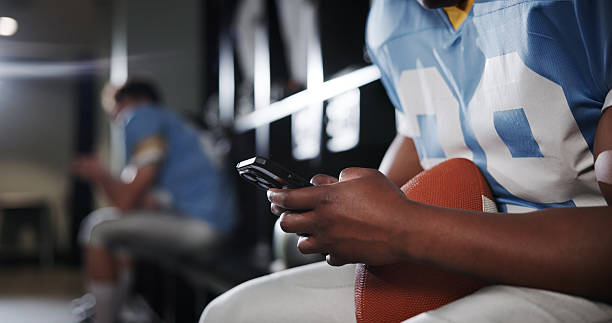












As social media becomes increasingly influential and dominant in our lives, high school athletes need to learn to manage not only physical pressure but also mental and digital pressures. Understanding how social media shapes confidence among students can help coaches and athletes adjust their games and improve their mental health. After practices, games, and long school days, many high school athletes spend their time relaxing by scrolling on Instagram or TikTok. Many social media feeds are tailored towards the user’s tastes, pushing videos they want to see towards the top of their feed. These can include highlight reels, training videos, recruitment announcements from colleges, and more. This is a huge gamble, as it can either boost or undermine their self-esteem through comparisons with other players.
Social media has become a major influence in teenagers’ lives, affecting the mental health of high school athletes. According to a Pew Research Center report published in December 2024 by Michelle Faverio and Olivia Sidoti, most teenagers own phones and are active online. Social media and the internet tend to become extremely addictive for teenagers. A separate research study, published in Cureus Journal of Medical Science in August 2023, found that prolonged use of social media can eventually lead to the development of depression, anxiety, stress, and other mental health issues among teenagers. Medical experts at Johns Hopkins University also say that excessive social media use can negatively impact how teenagers’ brains develop and how they interact with people. As teenagers are still developing mentally and emotionally, these outside influences can have extremely negative effects on teens.
As more and more teenagers are affected by social media, high school athletes experience a unique form of pressure, since they often have an online presence and are likely to receive judgment. Many high school athletes who aim to pursue their sport at the college level have accounts dedicated to their stats, highlights, and achievements for recruits and colleges to review, according to NCSA College Recruiting. Although these accounts are intended for recruitment purposes, because they are public, the likelihood that high school athletes with these accounts will experience online abuse is extremely high. It leaves high school athletes open to criticism, negative comments, and extremely unrealistic expectations from people online. Research from UC Davis Health has shown that recruiting culture and exposure to competition via social media can cause unnecessary stress, especially when high school athletes feel they are not good enough to meet unrealistic expectations set by social media. Online spaces can amplify the pressures high school athletes already face, making social media another competition they need to deal with outside of sports.
Many students, however, have said that social media is a motivating factor, and watching others play their sport drives them to do better. However, constant exposure to tailored highlight reels often leads to unhealthy comparisons that negatively affect athletes’ performance and mental health. A research article written by sports psychologist Dr. Patrick Cohn shows that many younger athletes begin to measure their success by what people on social media say, rather than by personal improvement or improvement within the team. Seeing other athletes get recruited or highlight reels from other teenagers can often set unrealistic expectations for how athletes should be playing at that level, making them feel behind or underdeveloped, even though they are developing normally. It can also foster an unhealthy work ethic, leading to burnout in athletes and potentially causing injuries that could have been avoided with a more adequate work ethic. Researchers at Stanford Medicine reported in 2021 that the human brain, especially in teenagers, is not able to process social comparisons. “Our brains aren’t equipped to process the millions of comparisons the virtual world demands,” they concluded.
As awareness grows of the pressures and issues high school athletes face, other athletes, coaches, and health experts are beginning to explore how social media can fit into an athlete’s daily life in a healthy way. Experts at Johns Hopkins Medicine recommend setting timers or creating boundaries for screen time, and recognizing when to skip toxic reels or stay to watch something that could help you as an athlete. Social media use can help athletes connect with other players and coaches, and teach them helpful things they can implement in their lives without harming their mental health. Some coaches and sports organizations are starting to include social media training in their sessions, teaching athletes not only about the sport but also how to handle the pressures they may face online. Health experts encourage athletes to prioritize real-world activities and validation to strengthen their mental health and break this cycle online.
As social media becomes increasingly influential and important, high school athletes need to learn to manage not only physical but also digital and mental pressures. In a world where high school athletes need to do much more than just play well and train hard, education about the impact of social media has become important, as many rely on it for growth and their futures in the sporting world. Understanding how social media affects mental health and confidence can help athletes, coaches, and schools create healthier environments for students and high school athletes. Learning to create a healthy balance with social media can help personal growth as much as training does; however, it needs to be done safely and correctly.