
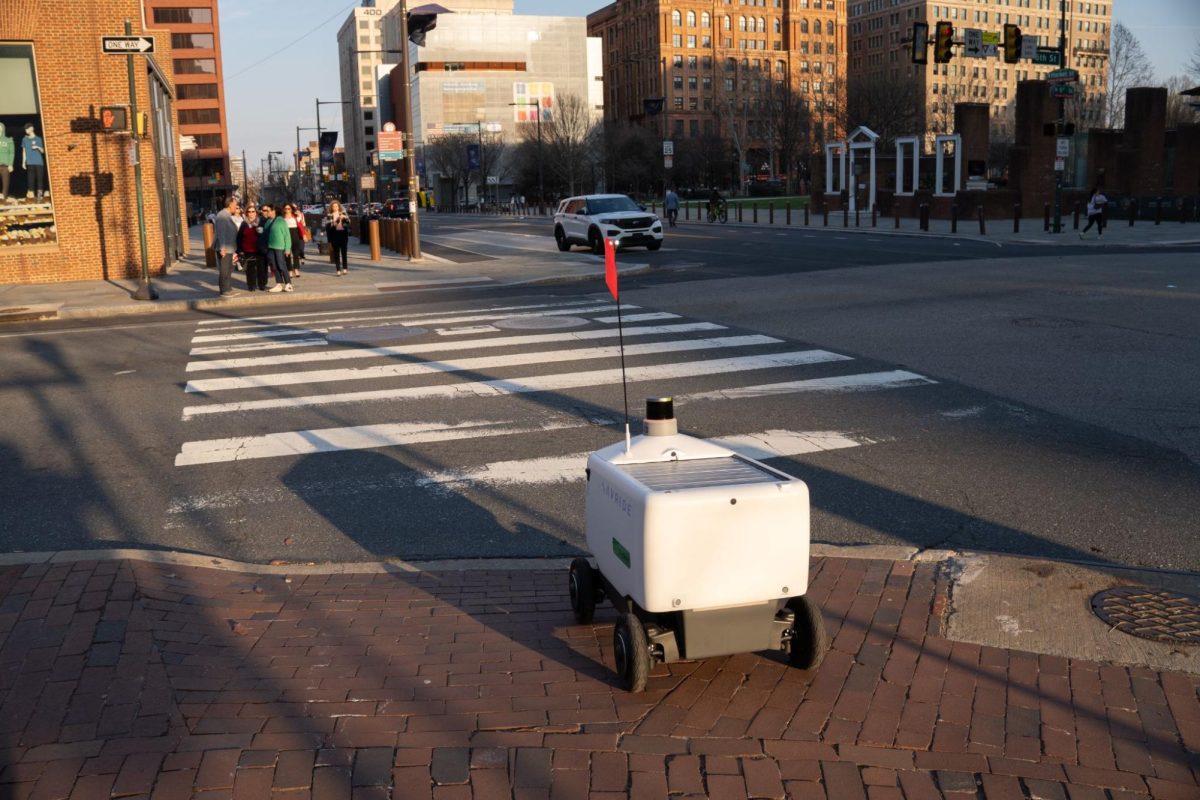













Just as cars replaced horse-drawn wagons, we may be seeing a shift from human-powered food deliveries to autonomous, AI-powered robot deliveries. On March 10, Uber Eats, with autonomous vehicle development company Avride, introduced a new robot delivery system to the City of Philadelphia.
Technologically, it’s impressive. Each robot uses a combination of cameras, lidar, and ultrasonic sensors to fit into bustling city life. The cameras are used to identify traffic lights, while ultrasonic sensors are used to prevent collisions with people and pets. The company claims that its sensors and cameras do not collect data. Each one uses a system similar to GPS to navigate the city. The robot uses lithium-ion batteries, providing a 12-hour runtime. They travel at 5 miles per hour.
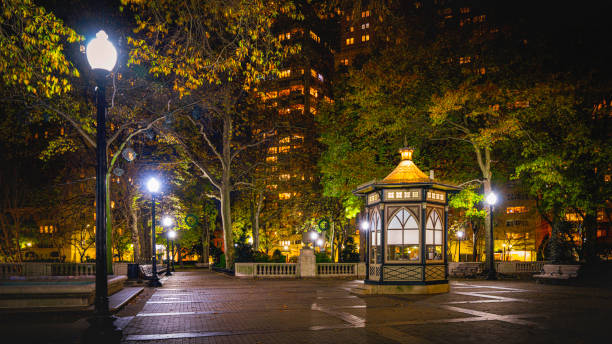
The robot delivery system runs from 10 a.m. to 10 p.m. and operates in a small district that spans parts of Center City and Old City. The area is bounded by 18th Street and Front Street to the east/west, and by Race and Spruce Streets to the north/south. Uber Eats hopes to expand its service soon, adding new restaurants to the list and adding more robots.
The response to the robots, especially in Philadelphia, has been less than welcoming. Philadelphia has forever been a center of robotic hatred since the dismemberment of HitchBOT in 2015. In a video uploaded days after the robots were first introduced, one of the delivery robots with the writing “please destroy me” can be seen waiting to cross the street. Someone sits on it, and someone threatens to throw it. It crosses the street and continues on its way.
The sprouting of this system follows a broader trend of delivery robots popping up in major U.S cities such as Los Angeles, Chicago, San Jose, Miami, Dallas, Austin, and Jersey City. They are also active in some European cities. Avride isn’t the only company to be putting these robots out. Similar companies include Serve Robotics, active in LA County, and Starship Technologies, working on many university campuses.
However, these robots are not without controversy and issues. In Chicago, residents are petitioning to remove the robots from sidewalks after a robot crashed through the wall of a bus stop, shattering the glass. In Miami, a robot stalled out on the tracks before it was run over by a train.
While these robots certainly represent progress, many are worried about what it could mean for the future of delivery drivers.