








As the weeks before Spring Break crept up, I came to the realization that my audacious trip to Big Bend National Park was unrealistic. In my frantic search for another trip to fill my time, I found a little sliver of an island right off the coast of Maryland: Assateague Island State Park.
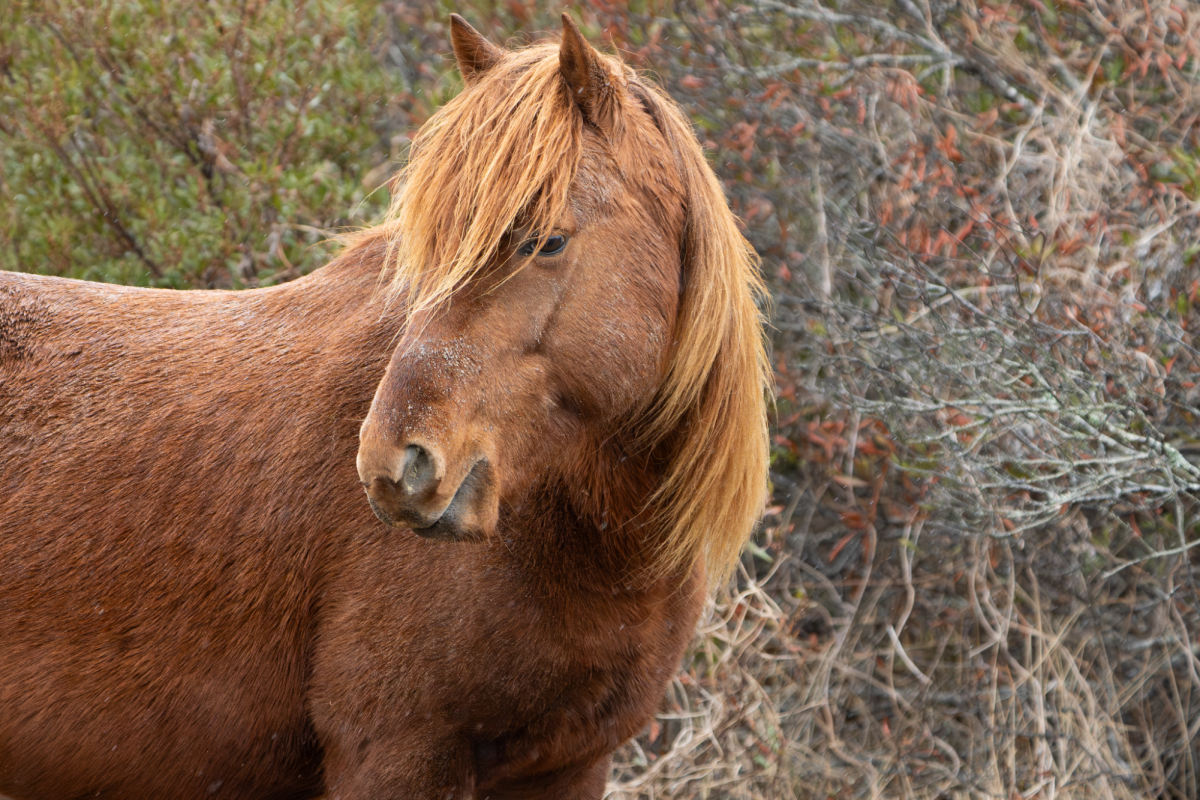
Assateague Island State Park in Maryland is best known for its herds of wild horses, which can be found all over the island. As my family drove over the bridge connecting the state park to the mainland during a recent spring break trip, I was instantly shocked to see a wild horse kneeling, prodding the ground for food. I soon realized that these interactions were not few and far between. During my 2-day trip, I saw so many horses that I can say with confidence that their presence was entirely mundane to me as I left the park. At points, I was just a few feet away from them. By far the most fascinating part of seeing these horses was their interactions. They were constantly next to each other and eating together in groups. There is much folklore surrounding these horses, with some locals saying that their presence was caused by a shipwreck off the Virginia coast. Whatever the story may be behind these beasts, they are an absolute wonder to see.
While horses may be the selling point of Assateague, its host of wildlife extends far beyond them. In my first couple of hours at Assateague, I could not stop jawing at these beasts as they pranced and whinnied around me, but as I quieted, I opened my ears to the hundreds of bird songs that were constantly chirping around me. As I walked along the boardwalks, I saw a wide variety of species: Belted Kingfishers, Downy Woodpeckers, Carolina Chickadees, and Egrets flying all around. Assateague is a world-renowned birding destination for this very reason and is home to over 200 bird species.
What allows this amazing collection of wildlife to survive is the interesting ecological landscape of the park. The park is split into three succinct sections. The sand dunes protect the forests from sea salt sprays from crashing waves. This lack of sea salt allows freshwater ponds to flourish, which can provide water to the animals. These freshwater ponds can grow into marshes, which round out the other end of the island. All of these habitats work together in a symbiotic relationship to support the ecosystem the strongest.
Assateague’s isolation is not only to the benefit of the wildlife, but also the views and nature itself. As the sun began to set, I settled in the RV that I was calling home, but the night was still young. I fell asleep briefly, but for the most part stayed awake until 4 a.m. As I headed out, the cold wind licked at my nose, but as I looked up, it was as if someone had sprinkled lights all over the night sky. Out to the southeast, I could make out a streak of lights in the sky that I knew was the core of the Milky Way. Assateague has been classified by astronomers as a “Bortle 3-4 zone,” thus meaning that it offers some of the darkest skies in the Mid-Atlantic region.
When craving nature while living in a city, there is no better place than Assateague Island State Park. It is a nationally recognized dark skies zone, a birder’s paradise, and home to wild horses.