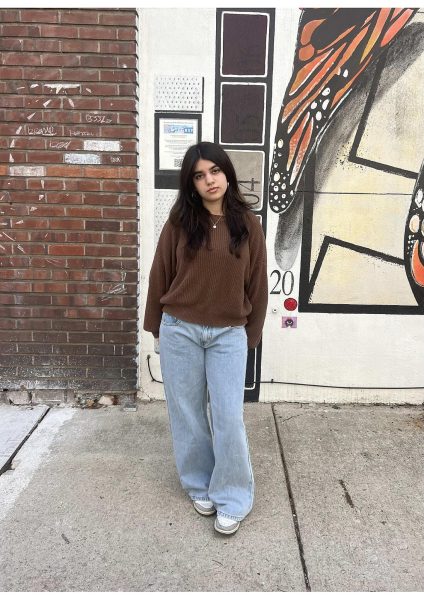










Tucked on a small side street in Queen Village, Philadelphia, lies Conrad Booker’s Harmony and the Windows of Curiosities mural. Full of history, community, and layered storytelling, this piece has become a well-known landmark on Fulton Street for over a decade, drawing in passersby with both its visual vibrancy and deeper meaning. What was once an overlooked wall now serves as a powerful reminder of how public art can reshape not just a space, but the identity of an entire block.
Before Booker began his work, the wall was neglected, unattractive, and often subjected to graffiti. It stood as a forgotten stretch of the block rather than a point of pride. Wanting change, neighbors who lived on this street approached Booker to liven up this dull space. “We all came together to improve our block and create something that represented the past, present, and future of our block,” said a longtime resident of the block involved in the planning of the mural. With support from a grant provided by the neighborhood’s civic association, along with additional funds raised collectively by residents, Booker was hired to complete the mural in 2012.
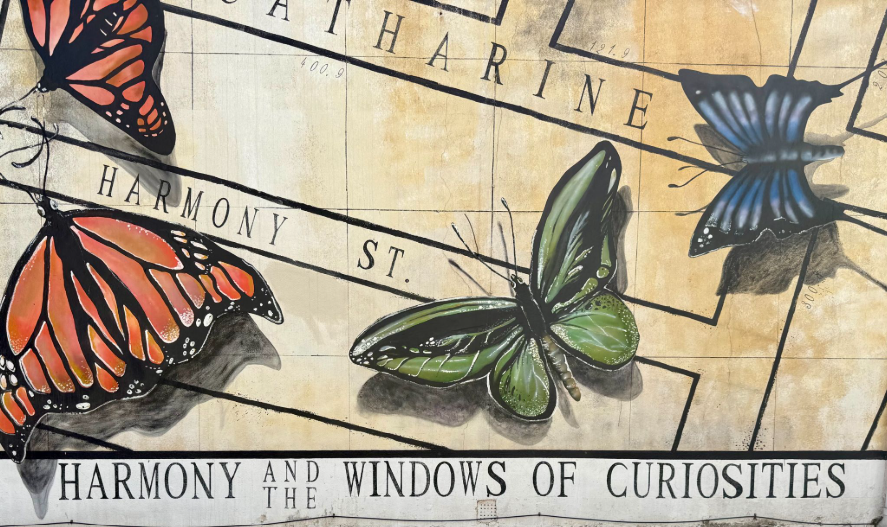
Booker was inspired by the themes of history, memory, and the power of transformation. Fulton Street’s former name, up until 1895, was “Harmony Street,” and Booker aimed to create that sense of harmony and peace in the mural. The mural’s title is a tribute to the street’s history, guiding his effort to restore a sense of unity and peace through art. The piece also features a 1895 map of the neighborhood (shown in photos above), grounding the work in both place and time.
In an interview with Streets Dept in 2026, Booker explains that on the map, the metal butterflies on the mural are depicted flying toward an African American cemetery around the corner. The cemetery now lies beneath Wecacoe Playground. He stated, “They [the butterflies] act as messengers of memory, ensuring those stories and souls are honored in the light.” This imagery transforms the mural into more than decoration. It becomes a site of remembrance, acknowledging histories that might otherwise remain unseen. He hopes that people who view this mural feel a sense of hope and community inheritance, and that they believe the “broken” parts of the city can be reclaimed.
The mural features a variety of unique 3D materials beyond the painting. Booker challenged the flatness of the wall by adding fake grass borders, butterflies made from metal cans, and other trinkets, which give the piece texture and depth. He embraced some of the wall’s negatives, such as wires, windows, and pipes, and incorporated them into his themes of restoration and harmony. The piece features multiple large-scale monarchs, as well as smaller metal butterflies. “Butterflies represent the ultimate journey from earthbound to the sky,” Booker reflected. He also had local children add their handprints to the mural, which he turned into more butterflies. “There’s a powerful truth in taking the simple touch of a child and giving it wings.”
“Harmony is possible when we honor the histories beneath our feet and the children who will inherit our future.” says Booker.