






















Every 100-word artificial intelligence (AI) prompt uses approximately one bottle of water for cooling. With the recent increase in AI usage, billions of gallons of water are used daily. Overall, researchers suspect this growing demand could lead to irreversible damage to the environment.
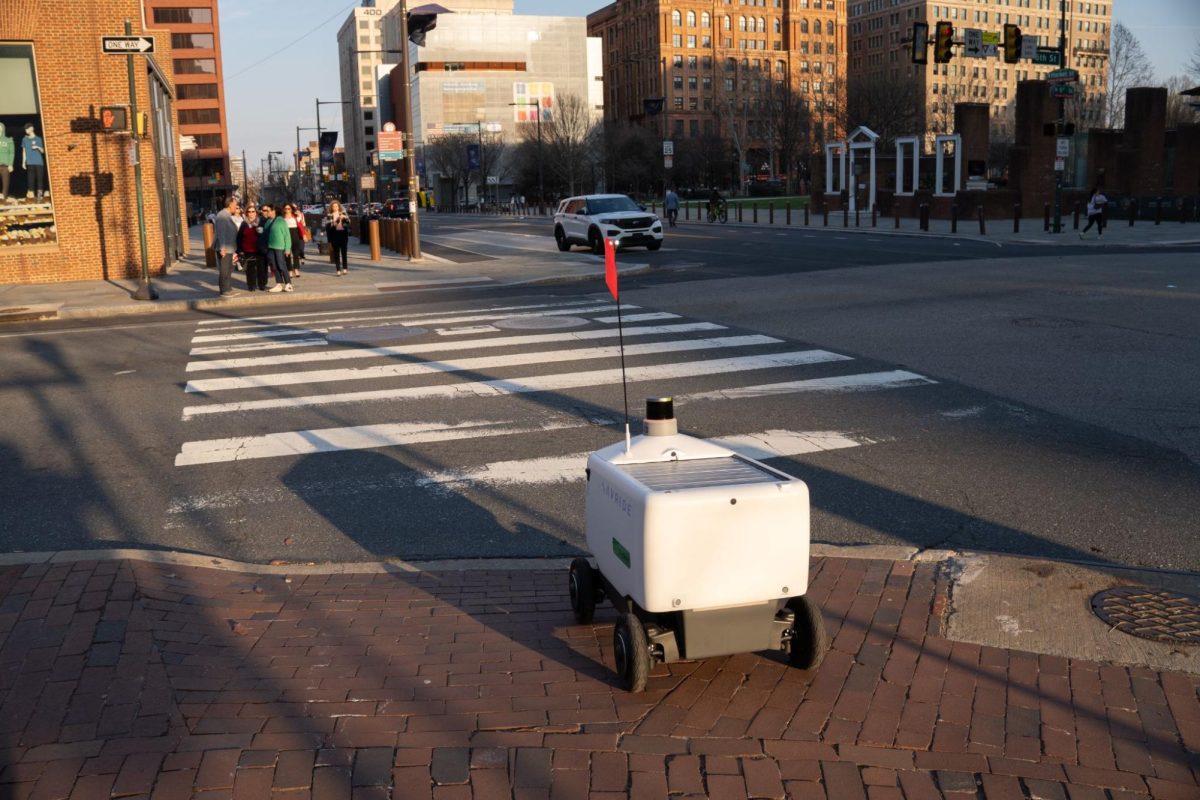
AI has quickly become a widespread tool that is almost impossible to ignore. Its popularity has made it a part of everyday life for some people. Its uses are very broad, ranging from image generation to data analysis. About 64% of U.S. teens say they use AI chatbots, mainly to search for information. Aside from online chatbots, AI can also be seen in medical devices to assist doctors with diagnoses and in transportation systems such as self-driving cars that provide about 150,000 rides per week. AI is not going away anytime soon, and as a result, it’s affecting the environment.
As AI becomes more apparent in daily life, many studies have shown it to be harmful to the environment. For example, a single AI-generated response can consume several times as much electricity as a standard search query. Generative AI training consumes up to seven or eight times more energy than a typical computing workload. AI has been one of the main causes of increased energy demands. “The demand for new data centers cannot be met in a sustainable way,” says Noman Bashir, a Computing and Climate Impact Fellow at MIT Climate and Sustainability Consortium (MCSC) and a postdoc in the Computer Science and Artificial Intelligence Laboratory (CSAIL). “The pace at which companies are building new data centers means the bulk of the electricity to power them must come from fossil fuel-based power plants.” AI relies on large data centers that use millions of gallons of water per day for “cooling down” to prevent equipment failure. These large consumptions of water can lead to depletion of freshwater, worsening water shortages, high evaporation loss, and more. The AI-driven water demand is expected to grow, with an estimated withdrawal of 4.2 to 6.6 billion cubic meters by 2027. Over time, these environmental pressures could contribute to long-term damage that may be difficult or even impossible to reverse.
Though AI is mainly known to be harming the environment, it also has some ways it can be very beneficial. AI has been used around the world in many ways to help fight climate change. For example, there are many AI systems that can help track icebergs, predict weather conditions, and identify pollution. “AI has been trained to measure changes in icebergs 10,000 times faster than a human could do it,” says the World Economic Forum. “This will help scientists understand how much meltwater icebergs release into the ocean – a process accelerating as climate change warms the atmosphere.” Many companies also use AI to map deforestation and predict other climate crises by analyzing satellite data and disaster conditions. In the Netherlands, AI has been used to reduce ocean pollution. There are AI models that can detect objects in the ocean and create detailed maps of ocean litter. This helps create more efficient cleanup than other methods. These examples show that AI can be a powerful tool for environmental protection when used responsibly.
AI is clearly impacting the environment at a rapid speed, but there are a few ways people are working to reduce its harm. Researchers are developing “Green AI” approaches that aim to significantly reduce the energy required to train and run AI systems. Some argue that stronger regulations, including energy-use reporting requirements, are necessary to manage AI’s environmental impact. Many developers are also working to make data centers more water-efficient by using systems such as closed-loop cooling, free cooling, air cooling, and immersion cooling. These strategies use new water management techniques that help make more sustainable choices for nearby communities and ecosystems. These innovations are important steps towards reducing AI’s environmental harm, but they are still developing and not widely implemented.
With the growth of AI comes an increase in its environmental impacts. Current evidence suggests that while AI has high environmental costs, its overall impact remains uncertain because potential benefits (like efficiency gains) are offset by high energy use and freshwater consumption. Some experts warn that climate impacts linked to AI growth may not be fully understood “until it is too late to do anything about it.” Overall, while AI has contributed largely to many environmental advancements, its harm to the environment will continue as long as AI usage increases. Unless meaningful efforts are made to make AI more sustainable, its negative environmental impacts are likely to continue growing.


Dave Marshall • Jun 6, 2026 at 4:20 PM
I appreciate your thoughtful, balanced & well-researched piece, Maya! For great data on the environmental impacts of AI and more, check out what-uses-more dot com – super-interesting to compare & contrast different actions!