

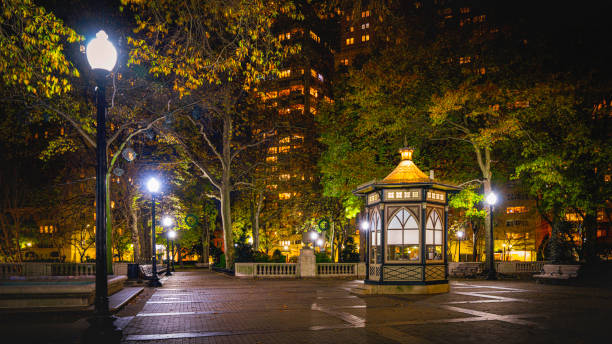











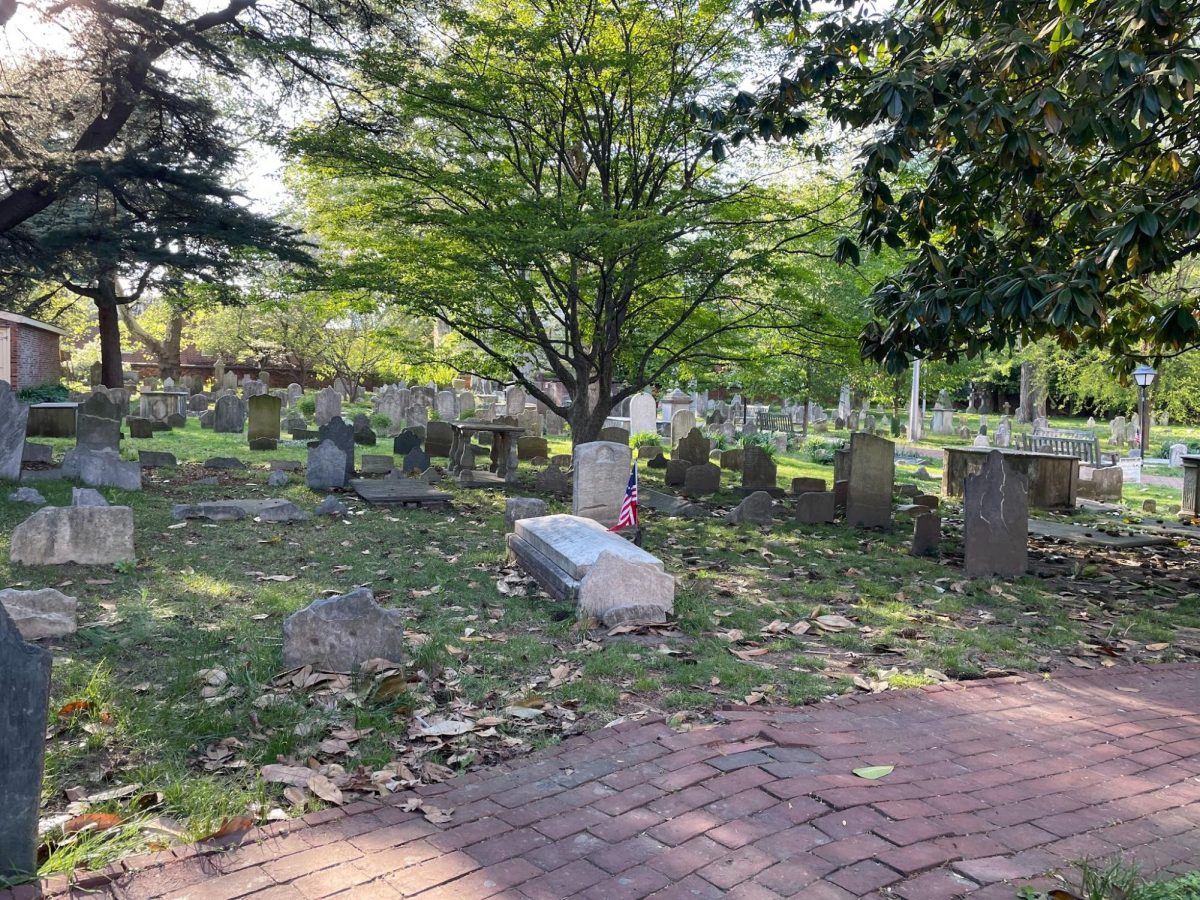
After a long day, the noise of the city fades along the quiet streets of Society Hill. Cobblestones that are centuries old stretch beneath each step, while tree-lined blocks and historic parks offer a calm escape just minutes from Center City Philadelphia.
Society Hill, a small and densely populated area, was laid out in William Penn’s original plan for the city of Philadelphia at the end of the 17th century. It was named after the Free Society of Traders, which was a company chartered by William Penn in 1682. The neighborhood lies in the southeast section of Center City Philadelphia and spans 163 acres. Society Hill runs between Walnut, Lombard, Front, and 8th Streets and is home to 6,000-7,000 residents.
The district thrived as both a residential hub and a center of commerce for a century until the 1800s. The area featured both Georgian and Federal-style homes and contained taverns, markets, and churches. However, as Philadelphians began traveling west, the neighborhood saw a steep decline in the 1900s.
By the 1950s, the area had become rundown. It was an extremely low-income zone, dominated by manufacturing facilities and factories. In the latter half of the 50s though, Philadelphia leaders acknowledged the potential of the neighborhood to become an integral and beautiful part of the city. For this reason, a plan was developed to both improve and revitalize the area, while also maintaining the traditional architecture and culture.
The city’s Redevelopment Authority partnered with a young organization, the Historical Commission. Hand in hand, the two bodies were able to collect hundreds of destroyed or struggling properties and sold them for a small price to owners who had the funds to restore the buildings following strict standards.
By the 1970s, Society Hill was one of the most prestigious and expensive areas in the city. Unfortunately, the revitalization of the neighborhood left many residents unable to afford to live there anymore. As more new buildings were built, the area became far less affordable. Almost a third of Society Hill’s residents were displaced, predominantly African American and Eastern European people.
Today, Society Hill remains one of the most attractive neighborhoods in Philadelphia. Many historic buildings and their architecture have been maintained, including churches and a hospital—all of which add to the already beautiful tree-lined blocks, granite streets, and old-brick sidewalks. There is even the Headhouse Farmers Market on 2nd and Lombard Streets every Sunday. As mentioned earlier though, while Society Hill stands as a pillar of successful revitalization, many critics feel that the success came at the cost of part of the original community, raising questions as to who benefits from urban change.
Society Hill serves as both a peaceful retreat and a reflection of Philadelphia’s complex history. The same cobblestone streets that offer calm and beauty also carry the weight of centuries of change. In the quiet of its parks and the shadows of its historic homes, Society Hill reveals that even the most beautiful places have layered stories beneath the surface.